This guide is for owners and investors planning to renovate an older, already-finished apartment in Dubai. The short answer: almost every renovation needs a written NOC from your building or developer before work starts, and works that touch walls, wet areas, electrics, fire systems or cooling may also need an authority permit. Which authority depends on where your building is.
Approvals are not just paperwork. Done right, they protect the money you put into the apartment. Done wrong, they cost you in stopped works, fines, lost rental weeks and deductions from your security deposit.
Why approvals are part of the return on your renovation
A renovation pays back through higher rent, faster letting, fewer repair call-outs or a better resale price. Every week the apartment sits empty works against that. Missing approvals add weeks in ways that are hard to predict:
- Stoppages. Building management can stop works that are not covered by the NOC, and the clock keeps running while the paperwork catches up.
- Rework. Work done without approval may have to be opened up, inspected or reversed.
- Repair liability. Under Dubai’s jointly owned property law, an occupant who makes unapproved works must pay to fix the damage they cause.
- Deposit deductions. Most buildings hold a refundable security deposit against damage to common areas, lifts and corridors.
- Lost rental weeks. Each delay pushes back the date the apartment can be let or listed again.
That is why we define every applicable permit and NOC up front, before the estimate is final. Approvals are never assumed.
Layer 1: the building or developer NOC
Most buildings require a written NOC before any work starts, even for cosmetic work such as painting or replacing a kitchen. It is issued by building management, the owners association or the developer. Requirements vary by building, and there is no single official template.
In practice, a building renovation NOC usually covers:
- the scope of works and drawings;
- the contractor’s trade licence and insurance;
- a refundable security deposit;
- permitted working hours;
- service-lift booking and protection of lifts and corridors;
- debris removal and gate passes for workers and materials.
Buildings set their own hours. These are often daytime only, with no noisy work on Fridays or public holidays. Your building management will tell you the exact rules for your tower, and it pays to read them before you plan the schedule.
Layer 2: the authority permit, if your scope needs one
Under Law No. 6 of 2019 on jointly owned property, substantial alterations to the structure or external appearance of a unit, or to any part of the jointly owned property, are allowed only after approval from the master developer, the Dubai Land Department (DLD) and the competent authority.
Which authority is competent depends on the area. Check whether your community is under Dubai Municipality (DM), the Dubai Development Authority (DDA) or Trakhees.
| Authority | Where it applies | What to know |
|---|---|---|
| Dubai Municipality (DM) | Most of Dubai outside special zones | Issues a Permit to Make Modifications or Additions to Buildings, applied for on the Build in Dubai platform. |
| Dubai Development Authority (DDA) | Its own development zones | Issues its own Building Modification Permit for completed buildings. The contractor applies online, with an appointment letter signed by the owner, consultant and contractor. |
| Trakhees (PCFC) | Areas owned by PCFC, Dubai World or their subsidiaries | Nakheel communities such as Palm Jumeirah are generally under Trakhees. Nakheel’s modification approval requires both a Trakhees approval and an NOC from Nakheel. |
| DMCC | Jumeirah Lake Towers (JLT) | JLT owners request a fit-out NOC from DMCC. |
Some free zones have their own approval authority. Confirm the route for your specific building before you commit to a scope. A fee and processing time apply to each permit; check the current ones with the authority.
What usually triggers an authority permit
Typically, works such as removing or moving walls, relocating a kitchen or bathroom, rerouting MEP services or touching the structure need an authority permit. Painting, tiling and like-for-like replacement usually do not. The building NOC is still needed in both cases.
Layer 3: utilities and fire systems
DEWA
If the works increase the connected load or change the supply or the distribution board, DEWA approval is needed. Like-for-like fittings usually don’t need it. Contractors and consultants doing electrical work must be enrolled with DEWA.
Civil Defence
Any change to sprinklers, smoke detectors or fire alarm devices goes through Civil Defence via an approved fire-systems contractor. A new ceiling layout or moved partition can easily affect these, so they belong in the design stage, not on site.
District cooling
Changes to chilled-water or FCU connections need building management approval and, where the district cooling provider’s equipment is affected, the provider’s NOC.
Who can do the work
Dubai Law No. 7 of 2025 regulates contracting across the whole emirate, including free zones. The law requires owners not to hire contractors who are not licensed and registered, and the register is run by DM. Ask for a valid trade licence covering the relevant contracting and fit-out activities, and check that subcontractors for electrics or fire systems are qualified for that work. Your building will also ask for the contractor’s licence and insurance as part of its NOC.
A practical sequence
- Define the scope. List what changes and what stays. Moving wet areas or walls changes the whole approval route.
- Read the building rules. Ask management for the renovation NOC requirements, deposit, working hours and lift booking rules.
- Identify the authority. DM, DDA, Trakhees or a free-zone authority, depending on your community.
- Check utilities and fire systems. DEWA load, Civil Defence devices, chilled-water or FCU changes.
- Submit and wait for approval in writing. Strip-out starts only with the building NOC in place.
- Keep records. Photos at each stage and recorded changes make deposit return and any inspection straightforward.
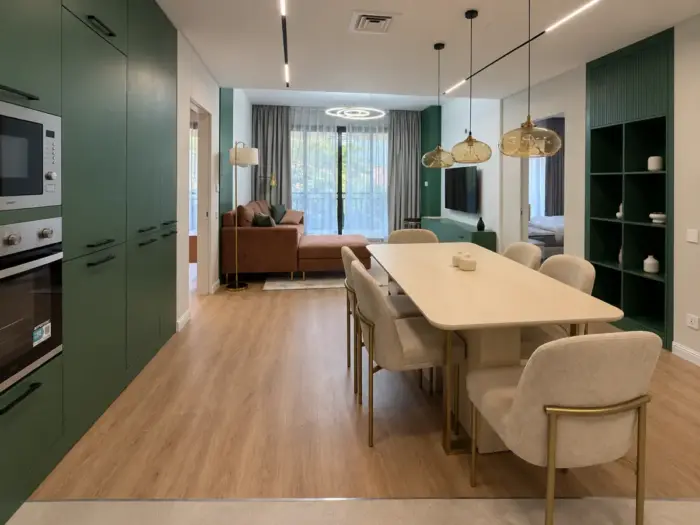
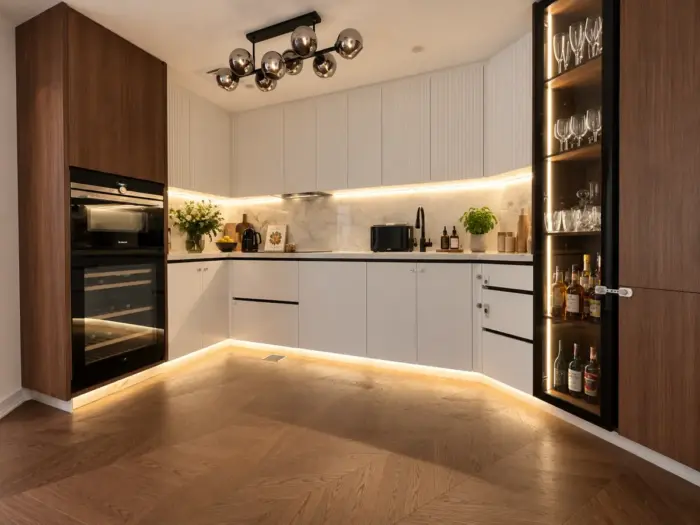
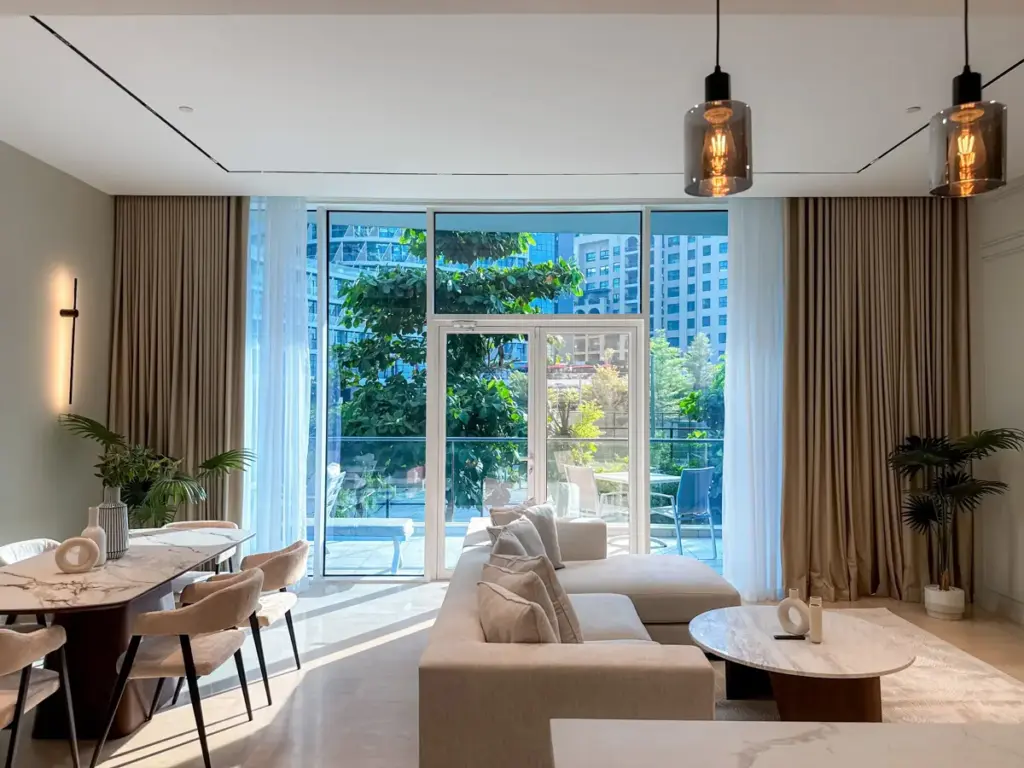
On our projects, such as the Shoreline 1-bedroom apartment, the Address studio full renovation and the Anantara 2-bedroom apartment, approvals are defined at the method stage, before procurement starts.
Rental owners: the cheapest approval is the one your scope doesn’t need. If keeping the kitchen and bathrooms where they are still gives the rental result you want, you avoid an authority permit and the weeks around it. We look at this on our renovation for rental and holiday homes page.
For the stages that follow approval, see how long an apartment renovation takes in Dubai, and for how approvals appear in an estimate, see what goes into a renovation estimate.
FAQ
Do I need a NOC to repaint or retile my apartment?
Usually you need the building NOC, because the building wants to control contractors, hours, lifts and debris. An authority permit is typically not needed for painting, tiling or like-for-like replacement.
Who applies for the permit, the owner or the contractor?
It depends on the authority and the building. For DDA’s Building Modification Permit, the contractor applies online with an appointment letter signed by the owner, consultant and contractor. For building NOCs, the owner or the owner’s contractor usually submits.
How do I know if my building is under DM, DDA or Trakhees?
Ask your building management or developer, and confirm with the authority. Nakheel communities such as Palm Jumeirah are generally under Trakhees, and JLT owners deal with DMCC, but always confirm per building.
What happens if works start without approval?
Building management can stop the works, and under Law No. 6 of 2019 the occupant must pay to fix damage caused by unapproved works. Expect delays, possible rework and deductions from the security deposit.
Can I renovate while a tenant lives in the apartment?
Eviction for renovation is possible only at lease expiry, with 12 months’ notice and a Dubai Municipality technical report, and only for works that cannot be done with the tenant in place. So cosmetic renovation is usually planned between tenancies, which is also when its value is captured at a new rent.
Planning a renovation and want the approval route defined before you commit? Contact FitOut Studio for a survey and an itemised estimate with every applicable permit and NOC listed.