If you own an older, already-finished apartment in Dubai and are planning a renovation, the first practical question is usually how long the apartment will be out of use. The short answer: it depends less on the size of the apartment than on the scope of work, the approvals your building and authority require, the building’s working hours and how quickly materials and decisions are ready. This guide walks through the stages from survey to handover and explains what makes each one shorter or longer.
We do not promise a number of weeks in an article. A realistic timeline can only be set after a survey and once the scope and the approvals route are known. What we can show is where time goes and how to avoid losing it.
The stages from survey to handover
A full renovation of an older apartment typically moves through eight stages. Not every project needs all of them, and some overlap.
- The apartment today. The starting point: the layout, the condition of the finishes and what is hidden behind them.
- Survey and design. Measurements, a check of the existing MEP, the brief, drawings and a specification.
- Protection and strip-out. Protecting common areas and lifts, then removing old finishes, with the building NOC in place.
- MEP upgrade. Wiring, water pipes and AC ducts, while walls and ceilings are open.
- Ceilings and walls. Gypsum ceilings, lighting coves and skimmed walls.
- Floors and tiling. Large-format porcelain laid on a levelled base.
- Kitchen, joinery and paint. Installation of the kitchen and built-in joinery, then final paint.
- Handover. Snagging, cleaning and handing the apartment back.
Behind these site stages sits a planning sequence that often decides the overall timeline: brief, site conditions (the existing space and the building rules), method and approvals (every applicable permit and NOC defined up front), an itemised proposal, procurement and, finally, execution and handover.
Before work starts: survey, design and approvals
The period before anyone touches a wall is the one owners most often underestimate. It covers the survey, design decisions, the itemised estimate and the approvals.
Building NOC
Most buildings require a written NOC before any work starts, and requirements vary by building. The application usually covers the scope and drawings, the contractor’s trade licence and insurance, a refundable security deposit, permitted working hours, service-lift booking and protection, and debris removal. How long the building management takes to review it varies from building to building, so it should be requested as early as the scope allows.
Authority approvals
Painting, tiling and like-for-like replacement usually need no authority permit. Works such as removing walls, moving wet areas or rerouting MEP typically do. Depending on the location, approvals from Dubai Municipality, the Dubai Development Authority (DDA) or Trakhees may apply, and some free zones have their own approval authority. If the works increase the electrical load or change the distribution board, DEWA approval is needed. Any change to sprinklers, smoke detectors or fire alarm devices goes through Civil Defence via an approved fire-systems contractor.
Each additional approval adds a step that has its own preparation, submission and response time. This is why we define every applicable permit and NOC up front: approvals are never assumed, and the programme is built around them, not the other way round. Our guide to renovation NOCs in Dubai explains who approves what.
On site: what each stage depends on
Protection and strip-out
Strip-out is usually one of the faster stages, but it is limited by the building’s rules: booked service-lift slots, lift protection and approved debris routes. Strip-out also reveals the real condition behind the old finishes. If it uncovers corroded pipes or failed waterproofing, the scope, and therefore the timeline, can change. Items that cannot be confirmed before strip-out should be shown as provisional in the estimate, so the change is expected rather than a surprise.
MEP upgrade
The more systems are replaced, the longer this stage. Replacing wiring, water pipes and AC ducts is typically done while walls and ceilings are open. Where an authority or DEWA approval or a Civil Defence inspection applies, the next stage can wait until it is complete.
Ceilings, walls, floors and tiling
These stages involve drying and curing times that cannot be compressed much: screed and levelling, plaster and skim, and waterproofing in wet areas. Good practice is a 24-hour flood test of wet-area waterproofing before tiling. Skipping waiting times to save a few days tends to cost far more later.
Kitchen, joinery and paint
The kitchen and built-in joinery are usually made to measure after walls and floors are ready, so their production time is a common cause of delay. Imported tiles, worktops, sanitaryware and fittings can have long lead times as well. Ordering these items early, once the specification is approved, is often the single most effective way to shorten the programme.
Handover
Snagging, final cleaning and, where applicable, the building’s final inspection and the release of the security deposit. Time here depends on how carefully quality was checked during the earlier stages.
What drives the overall duration
| Factor | Tends to shorten the timeline | Tends to lengthen it |
|---|---|---|
| Scope | Cosmetic work, existing layout kept | Full strip-out, new MEP, layout changes |
| Approvals | Building NOC only | Authority, DEWA or Civil Defence approvals on top of the NOC |
| Building working hours | Longer permitted hours, easy lift access | Restricted hours, limited lift slots, no noisy work on some days |
| Lead times | Materials in stock, orders placed early | Custom kitchen and joinery, imported materials ordered late |
| Occupancy | Vacant apartment | Occupied apartment, works done in phases |
| Owner decisions | Specification approved before work starts | Choices left open, changes during works |
Building working hours
Buildings set their own hours, often daytime only, with no noisy work on Fridays or public holidays. In DDA areas, for example, a 2025 circular permits construction activities only between 7:00 AM and 8:00 PM. Fewer working hours mean more calendar days for the same amount of work.
Occupied or vacant
Renovating an empty apartment is usually faster. When people live in the apartment, works are often split into phases, daily cleaning and protection take more time, and noisy or dusty work has to be planned around them.
Decisions by the owner
Every decision left open after the start, such as tile choice, kitchen layout or lighting positions, can hold up a stage. Changes during works affect the cost and the timeline. That is why we keep decisions on record: what was agreed, when, and what it changes.
For a rental apartment, vacant weeks are a cost
If you rent out your apartment, the duration of works is part of the renovation cost. Every week the unit stands empty is lost income, in addition to what you pay for the works themselves. When you compare whether a renovation pays back through higher rent, faster letting or fewer maintenance call-outs, include the vacant period in the calculation.
The most effective way to shorten downtime is to do the slow, non-physical work before strip-out:
- complete the survey and agree the scope and specification while the tenant or guests are still in;
- submit the building NOC and any authority applications in advance;
- order the kitchen, joinery and imported materials as soon as the specification is approved;
- plan the start of works for the end of a tenancy or a quiet booking period.
For long lets, the value of a renovation is in practice captured mainly at a new tenancy, because rent increases on renewal are capped by the RERA Rent Index. Planning the works between tenancies therefore helps twice: less lost rent and a better position for the new lease. More on this in our rental and holiday-home renovation page and in the article on what goes into a renovation estimate.
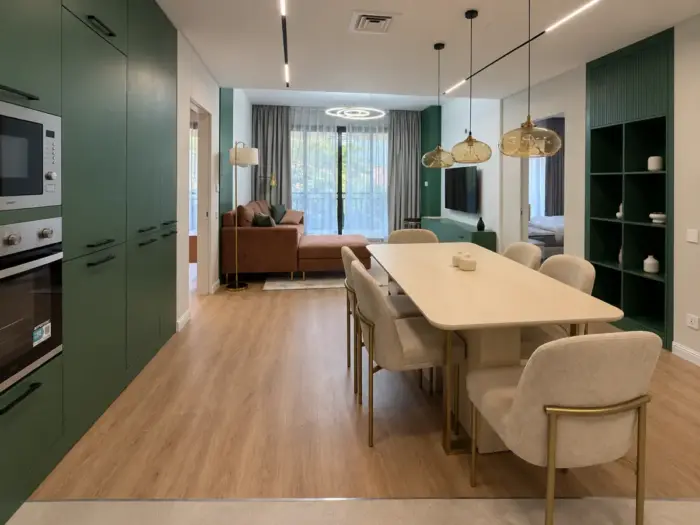
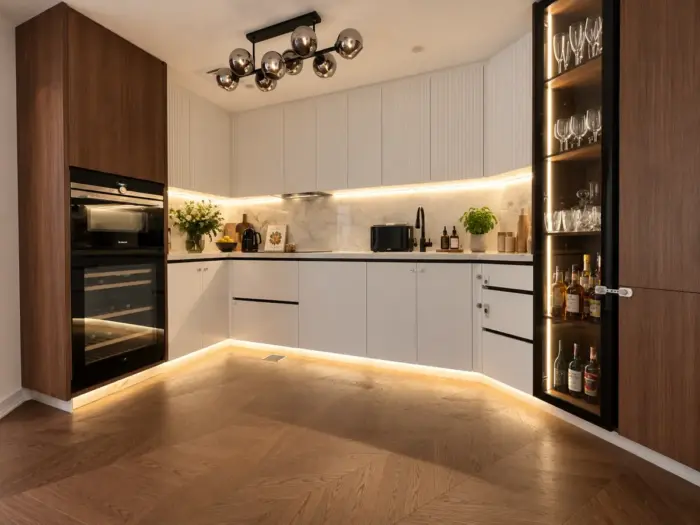
You can see examples of completed work in our projects: a full renovation of a studio at Address, a 1-bedroom apartment at Aegean and a 2-bedroom apartment at Shoreline.
FAQ
Can you tell me how many weeks my renovation will take?
Only after a survey. The timeline depends on the scope, the approvals route, the building’s working hours and material lead times. Once these are known, a programme can be set by stage.
Can the approvals be done while the tenant is still living there?
Usually the preparation can: the survey, design, specification and applications. Building rules on what is required before work starts vary, so check with your building management.
Does a cosmetic refresh need an authority permit?
Painting, tiling and like-for-like replacement usually do not need an authority permit, but most buildings still require a written NOC before any work starts.
What most often delays a renovation?
Typically, approvals requested late, long lead times for custom kitchens, joinery and imported materials, restricted building working hours, hidden conditions found at strip-out and decisions changed during works.
Planning a renovation and want to know how long your apartment will be out of use? Contact us for a survey and a programme by stage.