If you own an older, already-finished apartment in Dubai and want to know what a renovation will cost, the honest answer is: it depends on scope, condition, building rules and specification, and a single number per square foot tells you very little. This guide is for owners and investors who want to read an estimate properly, compare quotes like for like, and spend only where the money comes back.
We do not publish prices here. Instead, we explain what drives the cost, how an itemised estimate should be structured, and how to judge whether a line item is worth paying for.
Why a single rate per square foot is misleading
Two apartments of the same size in the same tower can need very different work. One may only need paint, new lighting and kitchen fronts. The other may have tired wiring, old water pipes, worn flooring and a bathroom that has started to leak into the unit below. A flat rate hides that difference, and it usually reappears later as variations.
A useful estimate starts from the apartment as it is today, the building’s rules and the result you need, not from an average.
What drives the cost of an apartment renovation
1. Scope: what is actually being done
The biggest driver is how deep the work goes. Cosmetic work (paint, lighting, fronts, fittings) costs far less than a full renovation that includes strip-out, new MEP, ceilings, floors and joinery. Most older units fall in between: a typical older-unit scope covers the kitchen, bathrooms, flooring, repaint and an MEP refresh.
2. Condition behind the finishes
What you cannot see often matters more than what you can. Old wiring, corroded pipes, uneven screed, failed waterproofing and tired AC ducts all add work. A proper survey before the estimate reduces surprises, and items that cannot be confirmed until strip-out should be shown as provisional, not ignored.
3. Layout changes
Keeping the existing layout is usually far cheaper than moving walls or wet areas. Under Dubai law, substantial alterations to the structure of a unit in a jointly owned building need the approval of the master developer, the Dubai Land Department and the competent authority. Wall removal, wet-area relocation or MEP rerouting typically also need a modification permit from the relevant authority, while painting, tiling and like-for-like replacement usually do not.
4. Specification of materials and fittings
Tiles, worktops, sanitaryware, joinery boards, hardware and lighting each come in a wide range. The same scope can cost very differently depending on what is specified. That is why the specification must sit next to the price.
5. Building and approval requirements
Most buildings require a written NOC before any work starts, and requirements vary by building. A building NOC usually covers drawings, the contractor’s licence and insurance, a refundable deposit, working hours, service-lift booking and protection, and debris removal. Depending on the scope and location, approvals from Dubai Municipality, DDA or Trakhees may apply. If the works increase the electrical load or change the distribution board, DEWA approval is needed; any change to sprinklers or smoke detectors goes through Civil Defence via an approved fire-systems contractor. Each of these affects cost and programme, so they belong in the estimate, not in a later surprise. For the detail, see our guide to renovation NOC in Dubai.
6. Site logistics
Permitted working hours, restrictions on noisy work, booked service-lift slots, lift protection and debris routes all shape how many days the crew needs and how the work is sequenced.
How an itemised estimate should be structured
A clear estimate lets you see what you are buying and compare quotes on the same basis. At FitOut Studio the proposal is an itemised AED estimate with scope, quantities, provisional items, allowances and exclusions. Here is what each part means.
| Part | What it shows | What to check |
|---|---|---|
| Scope | Each piece of work, room by room or by trade | Nothing vague like “bathroom works” without detail |
| Quantities | Square metres, linear metres, number of points or items | Quantities match the survey and drawings |
| Specification | Material, brand or grade for each item | Quotes compared on the same specification |
| Provisional sums | Work that cannot be fully priced until strip-out (e.g. hidden pipes) | How they will be confirmed and approved before spending |
| Allowances | A budget for items you have not chosen yet (e.g. tiles, fittings) | The allowance is realistic for your intended choice |
| Exclusions | What is not included (e.g. furniture, appliances, authority fees) | Nothing you expected is quietly excluded |
A cheap quote is often an incomplete one. Before comparing totals, line up scope, quantities and specification. A lower number with more exclusions, thin allowances or missing approvals is not a saving.
Spend where it returns: the ROI lens
A renovation should make financial sense. Before choosing finishes, decide what the money is meant to achieve: higher rent or nightly rate, faster letting, fewer vacant days, fewer maintenance call-outs, or a better resale result.
What usually pays back
- Fixing what renters see and use every day: kitchen fronts and worktops, bathroom fittings, lighting, paint and worn flooring.
- AC performance and reliable MEP, which reduce call-outs and complaints.
- Durable mid-specification materials that survive turnover.
- Standardised finishes across units, so replacements are simple.
What usually does not
- Moving wet areas or changing the structural layout in a rental unit.
- Premium bespoke finishes that the rent will not recover.
- Over-personalised design that narrows the pool of tenants or buyers.
- Expensive items that are easily damaged by frequent turnover.
A simple payback check
Payback compares what the renovation earns or saves with what it costs. In structure:
Benefit = extra rent (or extra nightly rate × occupancy) + fewer vacant days + fewer repair call-outs + any resale or valuation effect.
Cost = renovation cost + rent lost during the works.
Plug in your own numbers. There is no credible published figure for how much renovation alone adds to rent or letting speed in Dubai, so treat any claimed “premium” with caution and base the decision on your unit, your building and your target tenant.
Timing matters
For long lets, rent increases on renewal are capped under Decree 43 of 2013, depending on how far the current rent is below the RERA Rent Index average. In practice, the value of a renovation is captured mainly at a vacancy or a new tenancy, so planning works between tenancies usually makes the most sense. Our guide to renovating a Dubai apartment for rent covers this in more depth, and our rental renovation service is built around it.
Examples of different scopes
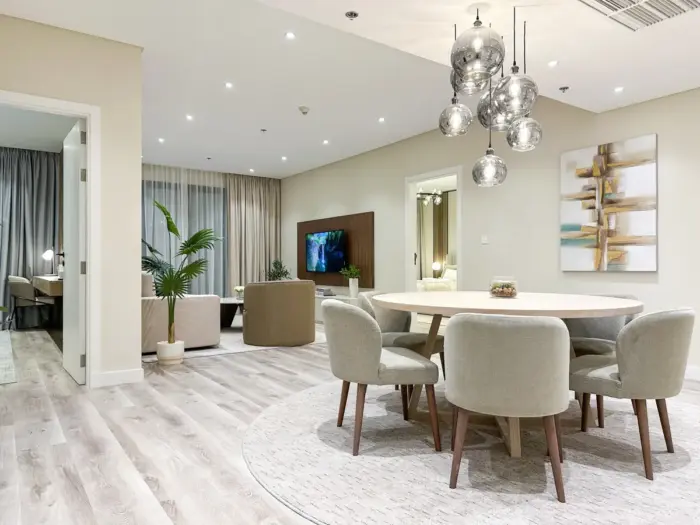
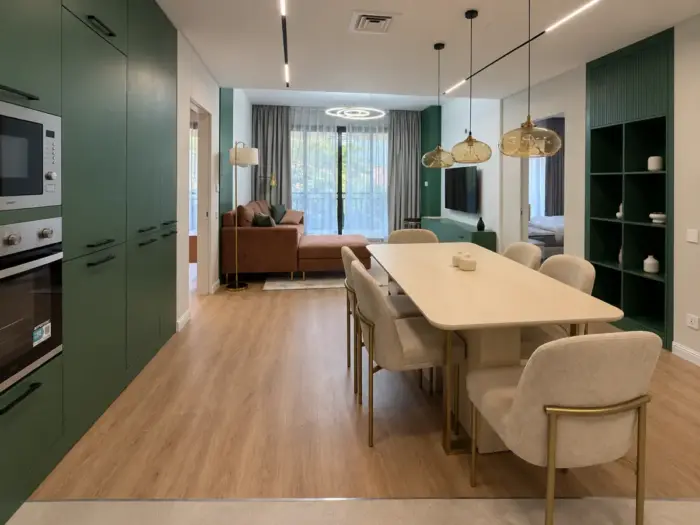
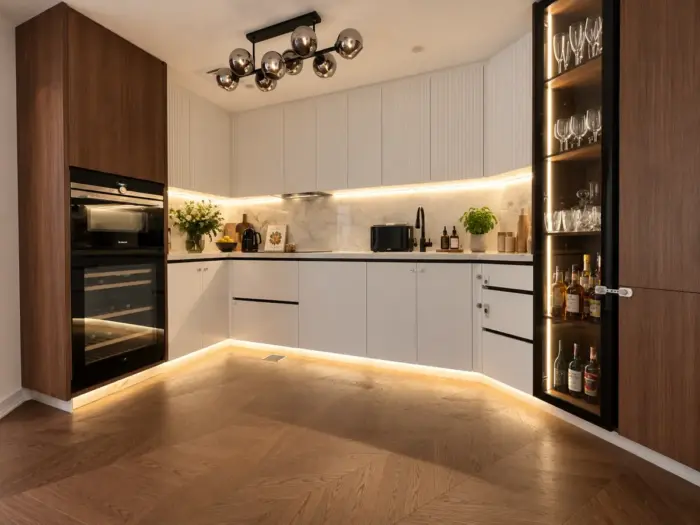
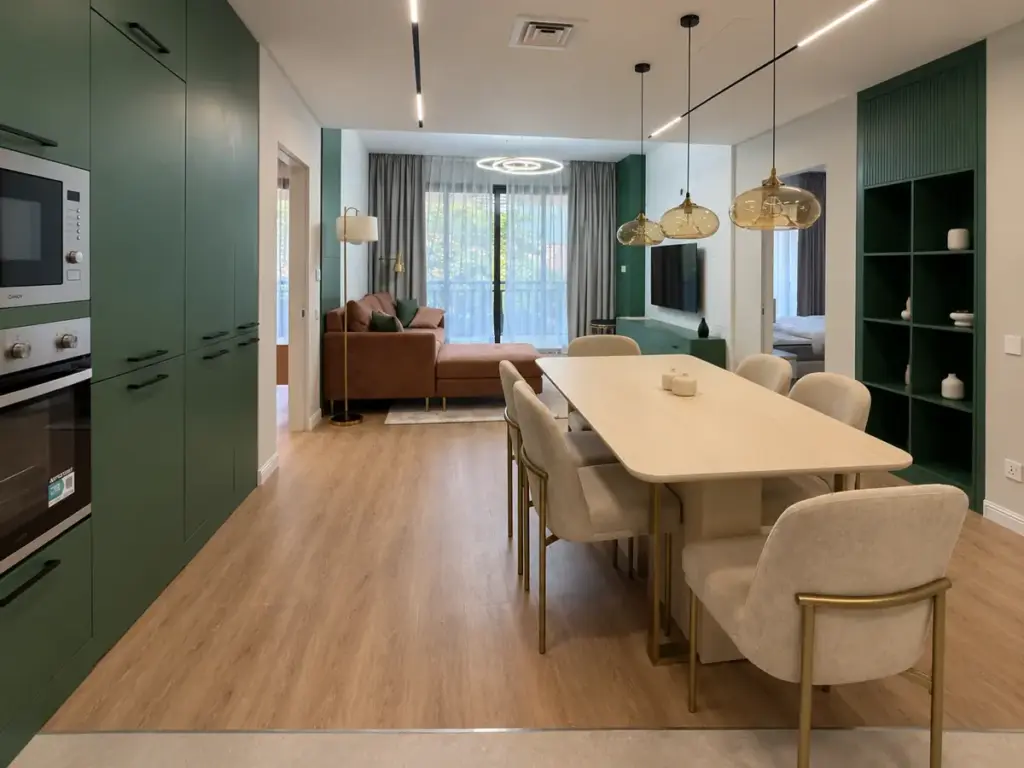
Scope varies from project to project. Compare a full renovation of an Address studio, the refreshed living room of a Shoreline 1-bedroom apartment and the dining area of an Anantara 2-bedroom apartment.
FAQ
Can you give me a price per square foot?
A per-square-foot figure hides the factors that really drive cost: condition, scope, specification and building requirements. An itemised estimate based on a survey is more reliable and easier to compare.
Why does my estimate include provisional sums?
Some conditions, such as hidden pipework or the state of the screed, can only be confirmed after strip-out. A provisional sum makes that risk visible, and the final amount should be confirmed with you before work proceeds.
Are authority and building fees included?
It depends on the estimate. Check the exclusions: deposits and fees from the building, developer or authorities are often listed separately.
What should I renovate first in a rental apartment?
Usually what tenants judge first and use daily: the kitchen, bathrooms, lighting, paint, flooring and AC performance. Structural changes rarely pay back in a rental.
Want an itemised estimate that shows what pays back and what does not? Contact FitOut Studio to arrange a survey.